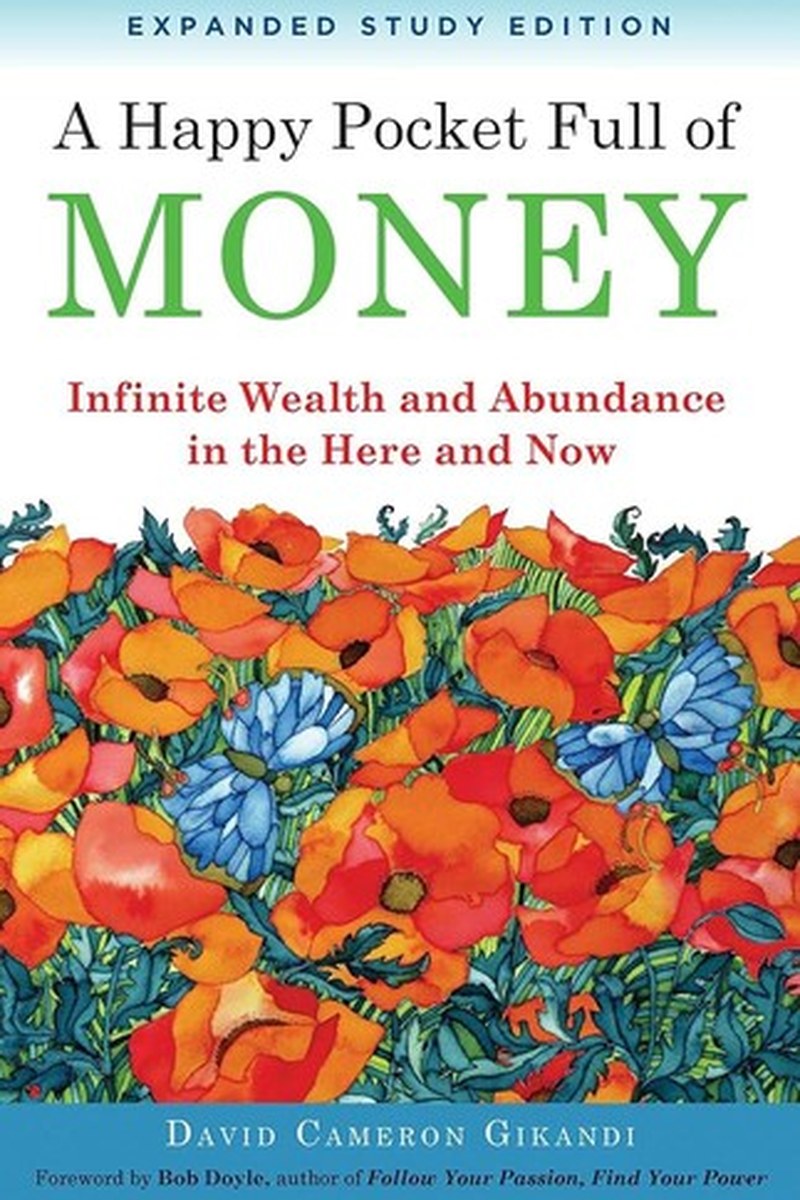
Gikandi argues that money is only the shadow — wealth consciousness is what casts it. A metaphysical case for building the inner state first.
The short version: a quick read to help you decide. Not a replacement for the book.
It doubles down on the connection between your money mindset and the laws of the universe. Where Think and Grow Rich hints at the metaphysics, Gikandi makes it the entire argument — then closes with a concrete financial system.
Gikandi opens by stripping money of its mystique: only around four per cent of the money held in banks exists as physical notes and coins. The rest is numbers on servers, sustained purely by collective belief. Money, he argues, is the external readout of an internal state he calls wealth consciousness — and the mistake most people make is staring at the shadow instead of cultivating the thing that casts it.
1. Money is a shadow; wealth consciousness is what casts it.
Stop measuring the balance and start building the inner capacity that produces it.
2. Be, then do, then have — most people run it backwards.
Being causes thinking, thinking causes speaking, speaking causes acting. Frantic activity without the inner state is wasted motion.
3. Declare it in the present tense: "I am", never "I will be".
The subconscious only receives now. A future-tense goal keeps its fulfilment permanently out of reach.
4. Desire freely, but never let yourself want.
To want something is to declare you do not have it, and the universe delivers your state precisely as you hold it.
5. Split every dollar 10:10:10:70 and own assets, not liabilities.
After twenty chapters of metaphysics, the book lands on concrete personal finance — and pays the investment slice first.
Anyone who has done the practical financial work and still senses that something internal is holding the ceiling down. If you have read Think and Grow Rich and wanted the author to go further rather than stop at the edge of the metaphysics, this is that book.
How to use this: pick the step that exposes the biggest gap in your current habits and run it for 7–30 days. This book rewards practice over reading.
Principle: Money is the readout, not the cause. Watching the balance changes nothing about what produces it.
The action: Write down what you currently believe makes someone wealthy, then mark each item as internal capacity or external circumstance.
Principle: The subconscious only receives now. "I will be" defers fulfilment indefinitely.
The action: Take your three most important financial goals and rewrite each as a present-tense statement, then read them aloud daily for 21 days.
Principle: Wanting is a declaration of lack, and the universe delivers the state you hold rather than the thing you chase.
The action: For one week, log every time you catch yourself saying or thinking "I want", and rewrite it as an intention.
Principle: The subconscious cannot distinguish a vividly imagined experience from a real one, so vague images build nothing.
The action: Spend ten minutes daily visualising the specific life your money enables, in full colour and detail, with several vivid reasons attached.
Principle: Pay the investment slice first, and finance liabilities from asset income rather than your own labour.
The action: Restructure your income into ten per cent tax, ten per cent giving, ten per cent long-term investment and seventy per cent living — paying the investment slice before bills.