You are not stuck because of your past, and other people's opinions are not your job. A conversation about how to be free and still belong.
The short version: a quick read to help you decide. Not a replacement for the book.
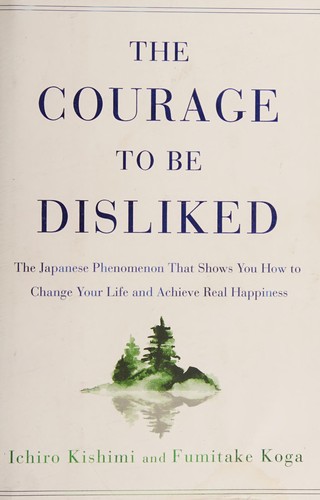
Told as a conversation between a restless young man and a philosopher, this Japanese bestseller introduces the ideas of the psychologist Alfred Adler. It reads like a story, and the arguments are meant to be pushed back on.
Your past does not decide who you are. You choose your actions to serve goals, and almost every problem is really about relationships. Freedom comes from handling only your own tasks and being willing to be disliked.
1. Goals drive you more than your past does.
The book argues you choose behaviour for a purpose, even if you cannot see it. Asking what an old story is useful for changes how you use it.
2. Separate your tasks from other people's.
Ask who will ultimately face the consequences. If it is not you, it is not your task, and trying to control it causes friction.
3. Stop seeking approval.
Living to win praise puts your life in other people's hands. The book argues that freedom means accepting that some people will dislike you.
4. Relate as equals.
Praise and scolding both treat the other person as above or below you. Gratitude treats them as an equal.
5. Contribution gives you worth.
Feeling useful to others, and living fully in the present moment, matter more than comparing yourself to anyone.
People who feel stuck in other people's expectations, or who carry an old story about why they cannot change. Adler's views are one school of thought and are debated, so read it as a way to examine your own thinking.
Principle: Handle only your own tasks.
The action: List three things you are worried about that involve other people. For each, decide who will ultimately face the consequences and whose task it really is.
Principle: We use the past to serve present goals.
The action: Write one reason you tell yourself you cannot change, such as I am like this because of how I grew up. Then write what that story lets you avoid.
Principle: Freedom means accepting that some people will dislike you.
The action: Notice one thing you do mainly to be liked. This week, do the honest version instead.
Principle: Relate as equals, not above or below.
The action: For one week, replace praise and criticism with a plain thank-you whenever someone helps you or does good work.
Principle: Feeling useful to others is where worth comes from.
Complete steps 1–4 first.
The action: Pick one small way to be useful each day for two weeks without looking for credit.