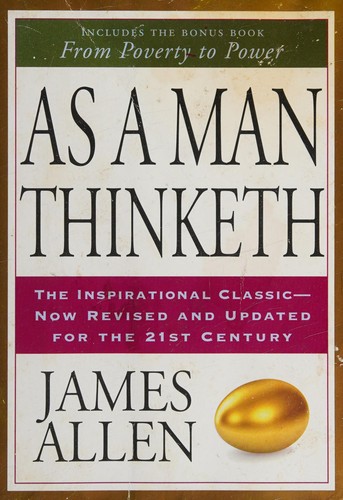
A person is literally the sum of their habitual thoughts — this 1903 essay is the origin point for most modern mindset thinking.
The short version: a quick read to help you decide. Not a replacement for the book.
This short essay laid the philosophical groundwork that Hill, Schwartz, and Murphy would later expand.
Circumstances don't make a person — they reveal them. Thought is the seed of everything a person becomes.
1. You don't attract what you want — you attract what you are.
Outer circumstances mirror inner thought patterns.
2. Thought is a seed; circumstance is the harvest — with a time lag.
Consistent new thought patterns take time to manifest.
3. Purpose focuses thought; without it, thought scatters.
A defined central purpose turns random thinking into productive energy.
4. Calmness is a sign of mastery, not passivity.
Reflects self-governance over thought.
5. You are the master of your thought, not its victim.
Mastery is practiced, not assumed.
Anyone drawn to mindset literature who wants the short, foundational source text.
Principle: You attract what you are, not what you want.
The action: Log your most repeated thoughts for 3 days and identify recurring themes.
Principle: Thought is a seed; circumstance is the harvest.
The action: Write a deliberate replacement for one limiting belief and repeat daily.
Principle: Purpose focuses thought.
The action: Write one clear, specific purpose.
Principle: Calmness is mastery, not passivity.
The action: Practice a deliberately calm response to a recurring irritation.
Principle: There's always a time lag between seed and harvest.
Complete steps 1–4 first.
The action: Review what's shifted after 30 days of the new thought pattern.