Written by an undefeated 17th-century swordsman, this text treats mastery as a total discipline of mind, timing, and perception.
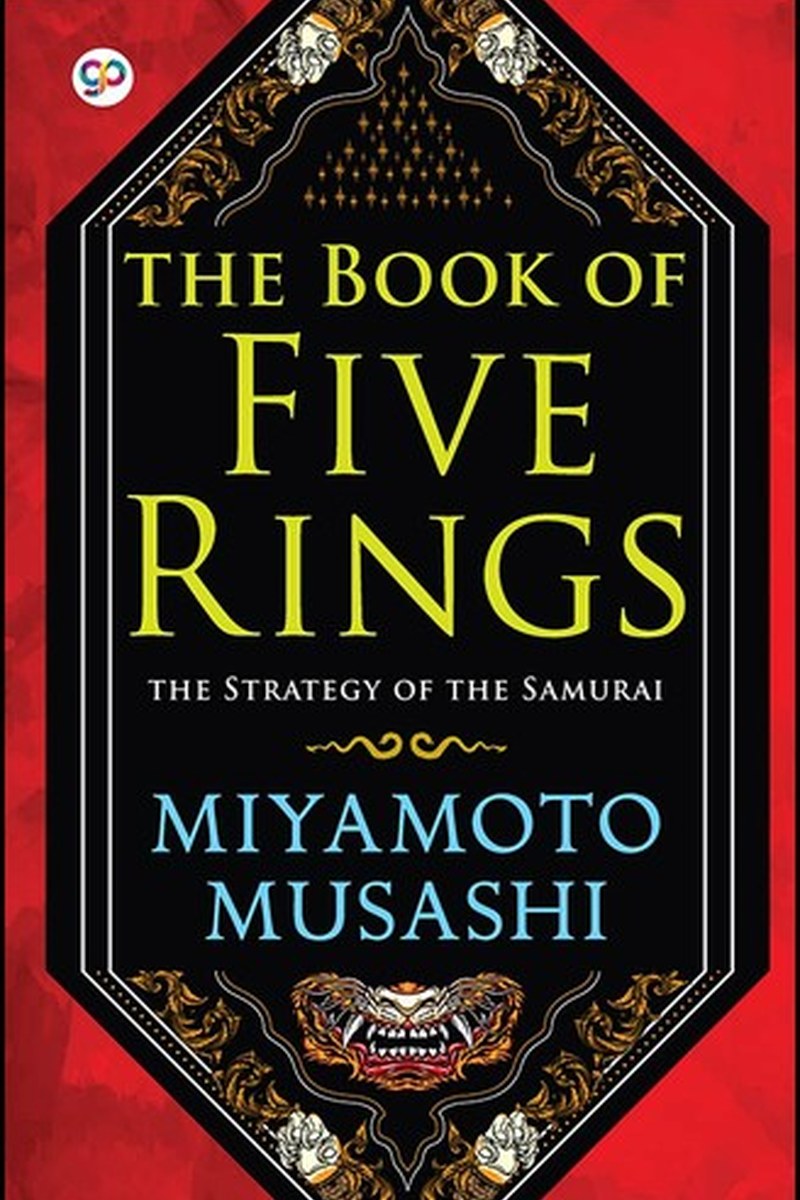
The short version: a quick read to help you decide. Not a replacement for the book.
Musashi's text has outlived its martial context to become a widely-read work on strategy and mastery.
Five books — Earth, Water, Fire, Wind, Void — address different dimensions of strategy, all pointing to mastery over memorized technique.
1. Timing is the essence of strategy.
More decisive than raw technique or strength.
2. Know your opponent's style to defeat their style.
Adapt rather than apply a universal technique.
3. Perceive the whole, not just the immediate threat.
Broader awareness reveals openings narrow perception misses.
4. Practice until technique disappears into instinct.
Deliberate technique becomes unnecessary.
5. The Void — true mastery goes beyond any fixed method.
Direct, unconditioned response to the moment.
Readers interested in strategy, discipline, and mastery as transferable concepts.
Principle: Know your opponent's style to defeat their style.
The action: Study how a competitor or negotiation counterpart typically operates.
Principle: Timing is the essence of strategy.
The action: Watch for the right moment to act in an important interaction.
Principle: Perceive the whole, not just the immediate threat.
The action: Zoom out and list the broader context before a decision.
Principle: Practice until technique disappears into instinct.
The action: Practice one skill deliberately for 10 sessions.
Principle: True mastery goes beyond any fixed method.
The action: Reflect on a moment you responded well without conscious thought.