You don't need to be a genius to beat the market — you need a simple, disciplined formula, and the patience to stick with it.
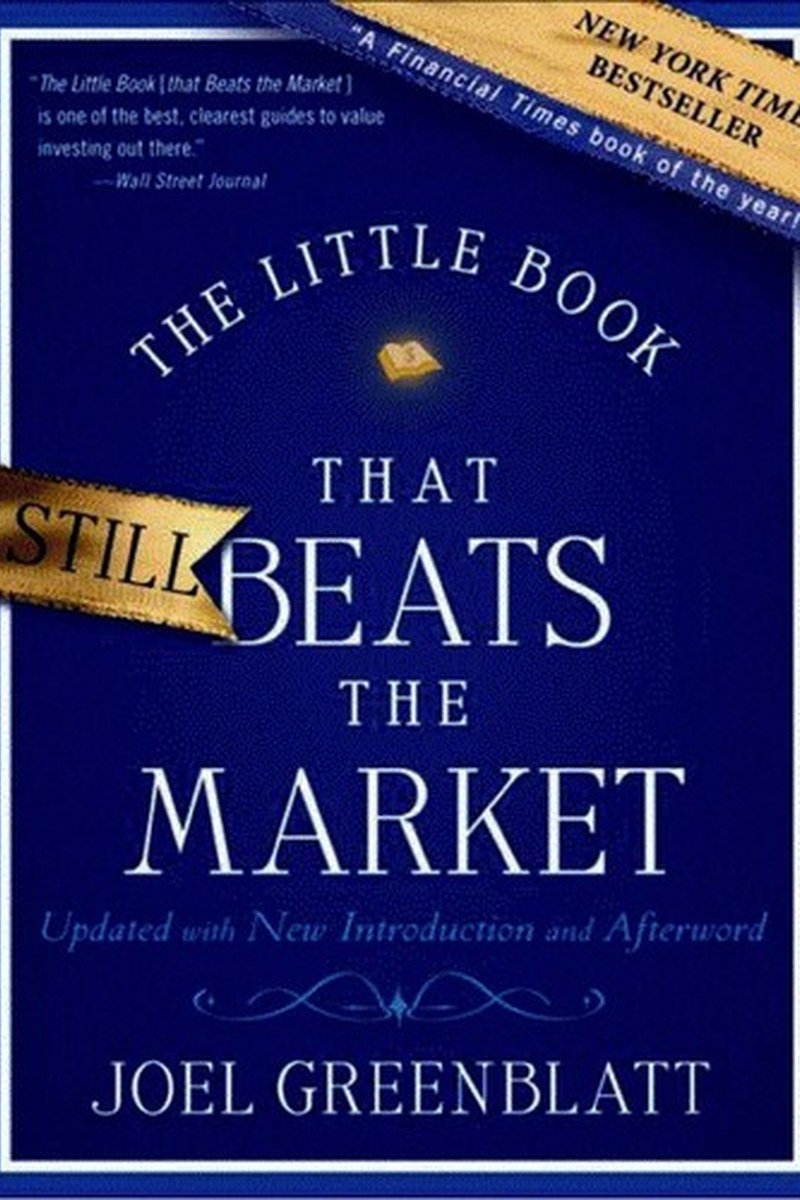
The short version: a quick read to help you decide. Not a replacement for the book.
Greenblatt distills value investing into a single mechanical rule — the "Magic Formula."
Buy good companies (high return on capital) at bargain prices (high earnings yield), hold for a year, repeat.
1. Combine "good business" and "cheap price" into one ranking.
Both qualities must be present simultaneously.
2. Return on capital measures business quality; earnings yield measures price.
Together they're Greenblatt's proxy for Buffett's "wonderful business at a fair price."
3. The formula will underperform sometimes — that's the point.
Underperformance keeps the edge intact.
4. Diversify across the formula's picks — don't cherry-pick.
The edge comes from the systematic process across a basket.
5. Simplicity is a feature, not a limitation.
Complexity is where investors talk themselves out of a sound process.
Investors who want a rules-based, low-maintenance approach to stock-picking.
Principle: Good businesses generate high returns on capital.
The action: Screen 20 stocks by return on capital and keep the top 10.
Principle: Cheap price matters as much as business quality.
The action: Rank by earnings yield and combine both rankings.
Principle: Diversify across the formula's picks.
The action: Select the top 5–8 ranked stocks as a basket.
Principle: The formula works over time.
The action: Write down your rebalance date.
Principle: Underperformance keeps the edge intact.
Complete steps 1–4 first.
The action: When the basket underperforms, log your emotional reaction and hold the course.