Having largely conquered famine, plague, and war, humanity's next projects are audacious — immortality, engineered happiness, and god-like control over our own biology.
The short version: a quick read to help you decide. Not a replacement for the book.
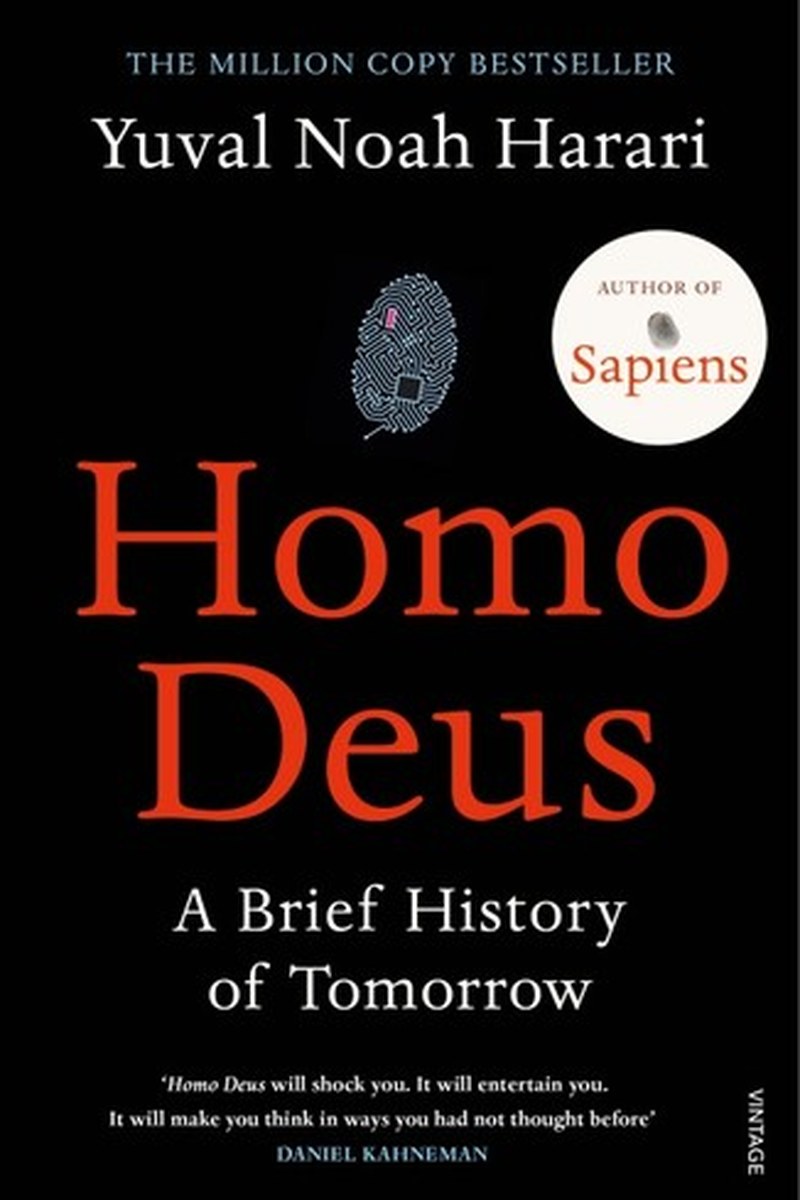
Following Sapiens, Harari turns from history to speculative near-future, tracing where technology and biotechnology might take humanity.
Historical enemies have largely been solved, freeing ambitions to aim higher — but data and algorithms may challenge the value we place on individual human agency.
1. Humanity's historical "big three" enemies are largely being solved.
Famine, plague, and war have declined dramatically compared to historical norms.
2. "Dataism" may be replacing humanism as our dominant belief system.
We're increasingly trusting algorithms to make decisions for us.
3. Free will may be more of a useful story than a biological fact.
Neuroscience suggests many "choices" are biochemical processes we don't consciously control.
4. The gap between the enhanced and unenhanced could become a new class divide.
Biotechnology could create a new, potentially permanent inequality.
5. Consciousness and intelligence may be separable.
AI could exceed human intelligence without ever having consciousness.
Readers who enjoyed Sapiens and want the same sweeping lens turned toward technology's near-future implications.
Principle: The historical "big three" enemies are largely being solved.
The action: Identify a problem your grandparents worried about that barely registers for you today.
Principle: Dataism may be replacing humanism.
The action: For one day, notice every recommendation you accepted from an algorithm.
Principle: Free will may be more story than fact.
The action: Trace the emotional/biological factors that shaped a recent decision.
Principle: Enhancement gaps could become a new class divide.
The action: Identify a technology whose access is unevenly distributed around you.
Principle: Consciousness and intelligence may be separable.
The action: Reflect on what was lost, beyond efficiency, when you automated a task.