There are no bad teams — only bad leaders. The most important quality of any leader is the willingness to own everything, unconditionally.
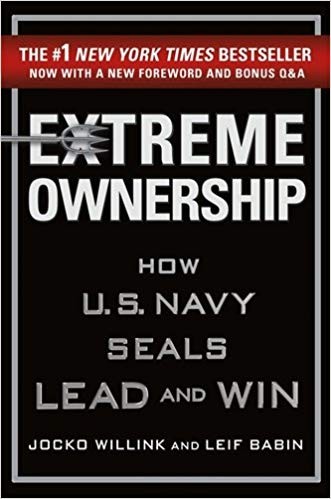
The short version: a quick read to help you decide. Not a replacement for the book.
Former Navy SEAL commanders translate combat leadership principles into a framework for business and life.
The leader is responsible for everything their team does or fails to do — not most things, everything.
1. There are no bad teams — only bad leaders.
The leader is the variable that actually matters.
2. Believe in the mission — or don't lead it.
You can't inspire belief you don't hold yourself.
3. Cover and move — teams must support each other, not compete.
Internal competition means the whole organisation loses.
4. Keep it simple — complexity is the enemy of execution.
The best plans are simple enough that everyone understands them completely.
5. Decentralised command — leaders at every level.
A team where only the top leader decides is fragile.
Anyone in a leadership role who has been tempted to blame external factors for underperformance.
Principle: Owning a problem completely gives you the power to fix it.
The action: Identify a situation you've been blaming on external factors, then rewrite it from complete ownership.
Principle: A leader who can't explain why cannot inspire others.
The action: Write the what, why, and success measure in plain language and test it with a colleague.
Principle: Decentralised command makes teams resilient.
The action: List recent decisions and assess which could have been delegated.
Principle: Complexity is the enemy of execution.
The action: Rewrite an overcomplicated process in its simplest form.