Knowing your strengths isn't enough — this is the practical, six-week system for restructuring your daily work around them.
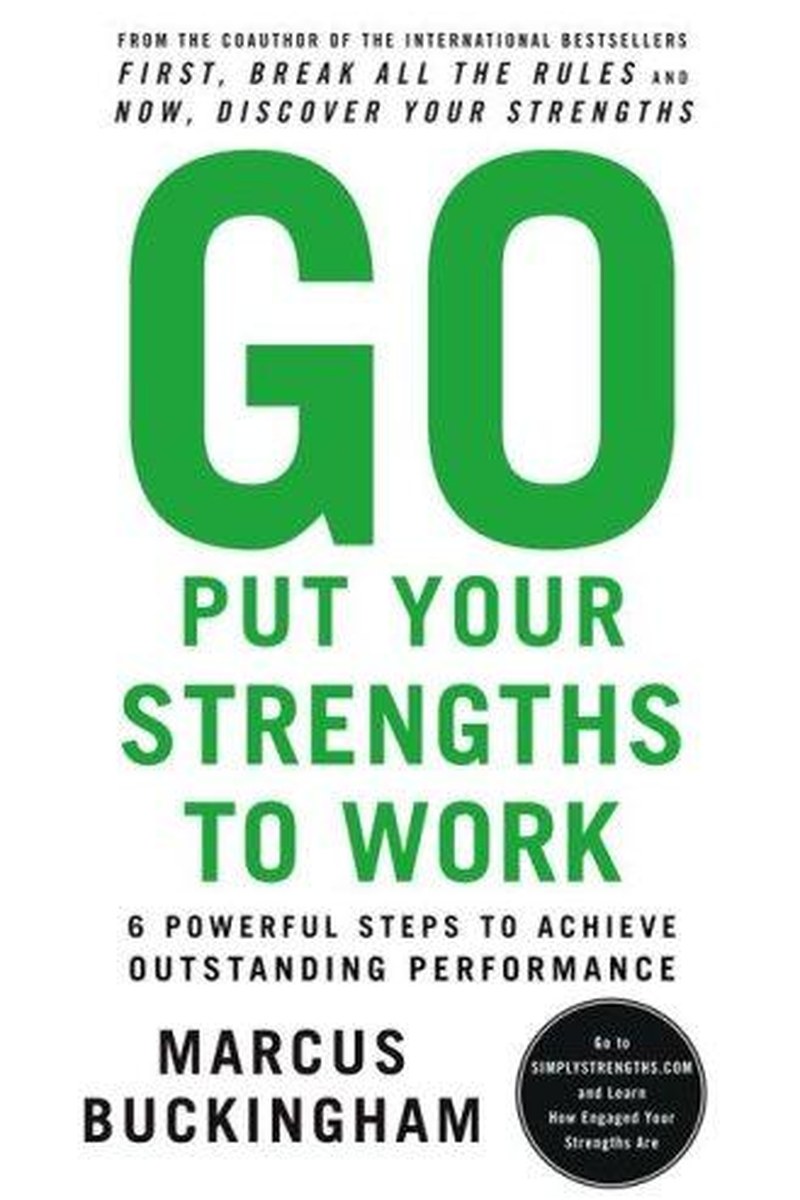
The short version: a quick read to help you decide. Not a replacement for the book.
Buckingham addresses the gap between "I know my strengths" and "my calendar reflects them."
Strengths are activities that make you feel strong and engaged. Increase time in these, decrease time in draining activities.
1. A strength feels like strength, not just competence.
You can be good at something and still feel drained by it.
2. Track your week before trying to change it.
Most people's assumptions about their strengths are wrong.
3. You can reshape a job without changing jobs.
Small adjustments to how you do existing tasks matter more than a new title.
4. Strength-spotting is a skill you can build in others.
Managers who notice strengths unlock performance gains.
5. Weakness management, not weakness elimination.
A strategy (delegate, partner, minimize) beats trying to eliminate weaknesses.
Anyone who's done a strengths assessment but hasn't changed how their week looks.
Principle: Track before you try to change it.
The action: Log energizing vs. draining activities for one week.
Principle: Reshape a job without changing jobs.
The action: Change how you do one draining task.
Principle: Strength-spotting is a buildable skill.
The action: Name and share a colleague's specific strength.
Principle: Manage weaknesses, don't eliminate them.
The action: Choose a strategy for a recurring weakness.
Principle: Confirm the redesign worked.
Complete steps 1–4 first.
The action: Re-run the energy log after 30 days.