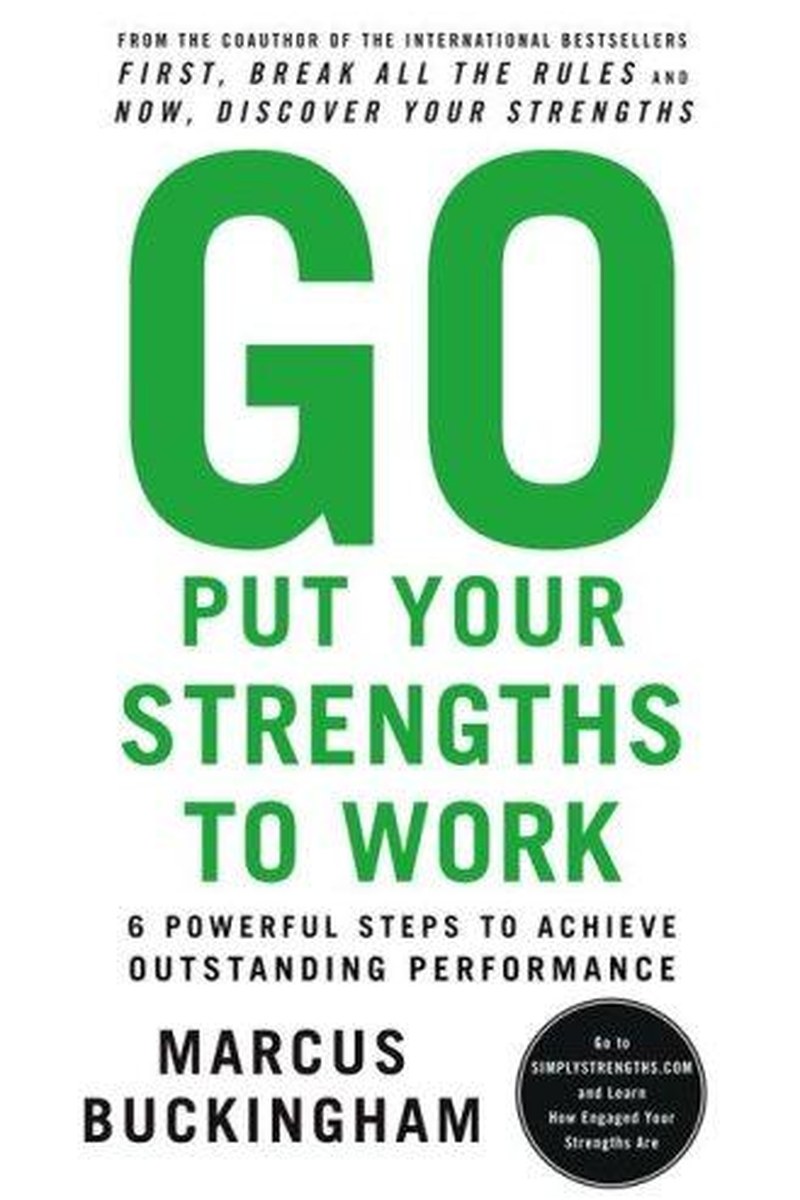
Most people can describe their weaknesses in detail but struggle to name their actual strengths — this book fixes that gap.

The short version: a quick read to help you decide. Not a replacement for the book.
Built on decades of Gallup research, this introduced a structured way to identify natural talents.
Everyone has recurring patterns of thought, feeling, and behavior — talents — largely fixed by adulthood. Excellence comes from investing in dominant talents.
1. A strength = talent × investment.
Talent becomes a strength only through deliberate practice.
2. You have far fewer true talents than skills.
Skills can be taught; genuine talents are rarer.
3. Weakness-fixing has a ceiling; strength-building doesn't.
The return on investment is asymmetric.
4. Organize your life around what you'll do for free.
Energizing activities are clues to genuine talent.
5. Self-awareness about talent should shape role design.
Negotiate your role to use your talents more.
Anyone who wants to identify natural talents and build a career around them.
Principle: Talent × investment = strength.
The action: Take a strengths assessment and list your top 3 talents.
Principle: Far fewer true talents than skills.
The action: List your skills and mark which connect to genuine talent.
Principle: Strength-building has no ceiling.
The action: Commit to one investment to sharpen a talent.
Principle: Energy is a clue to talent.
The action: List 3 activities you'd do without pay.
Principle: Shape the role around your talents.
Complete steps 1–4 first.
The action: Propose a role change that uses your top talent more.