The techniques that close small sales actively destroy large ones. This is the research-backed guide to selling by asking better questions.
The short version: a quick read to help you decide. Not a replacement for the book.
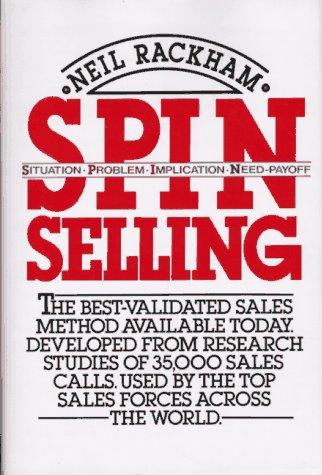
Rackham studied 35,000 sales calls across 23 countries to find what the best salespeople actually do differently.
A specific sequence of questions — Situation, Problem, Implication, Need-Payoff — guides the buyer to articulate their own needs and urgency.
1. In large sales, questions outperform pitches every time.
The best salespeople talk less and ask more.
2. Implied needs and explicit needs are completely different.
Only explicit needs drive purchasing decisions.
3. Implication questions are the most powerful tool in complex selling.
They create urgency without pressure.
4. Need-Payoff questions make the buyer pitch to you.
When buyers describe the benefit themselves, they're more committed to it.
5. Closing techniques that work on small sales create resistance in large ones.
The best closers advance through smaller commitments.
Anyone selling products, services, or ideas where the decision is significant or involves multiple stakeholders.
Principle: You need to understand the buyer's world before asking deeper questions.
The action: Write situation and problem questions for one prospect.
Principle: Implication questions develop the problem into felt urgency.
The action: Write implication questions exploring the consequences of each problem.
Principle: Need-Payoff questions let the buyer articulate value themselves.
The action: Write Need-Payoff questions and practise the full SPIN sequence aloud.
Principle: Closing techniques create resistance in complex sales.
The action: Replace a closing technique with a natural next-step advance.